










Hemp is one of Europe’s oldest working plants. For centuries it held up sails, tied down cargo and filled soup bowls. It gave us words we still use today. So pack a small bag (a hemp one, if you like) and join us on a quick tour across the continent.
Where the story begins
According to Britannica, hemp originated in Central Asia. People in China were growing it for fibre as early as 2800 BCE. In Europe, hemp was grown in the Mediterranean countries early in the Christian era. It then spread through the rest of Europe during the Middle Ages.
Plants grown for fibre were sown close together. Britannica notes that they usually reach 2 to 3 metres tall, with almost no branches.
Getting the fibre out took real work. The stalks went through retting, drying and crushing. Then a shaking process separated the long fibre from the woody core. The result was a strong, durable fibre. It was perfect for twine, rope, cable and coarse fabrics such as sacking and canvas.
A word woven from hemp
Here is a fun fact for your next quiz night. The word “canvas” comes from hemp. Etymonline traces it back to the Old French “chanevaz”, which means “made of hemp”. That word comes from the Latin “cannabis”. The English word dates from the mid 14th century. So every painting on canvas carries a little hemp in its name.
France: a royal ropeworks in Rochefort
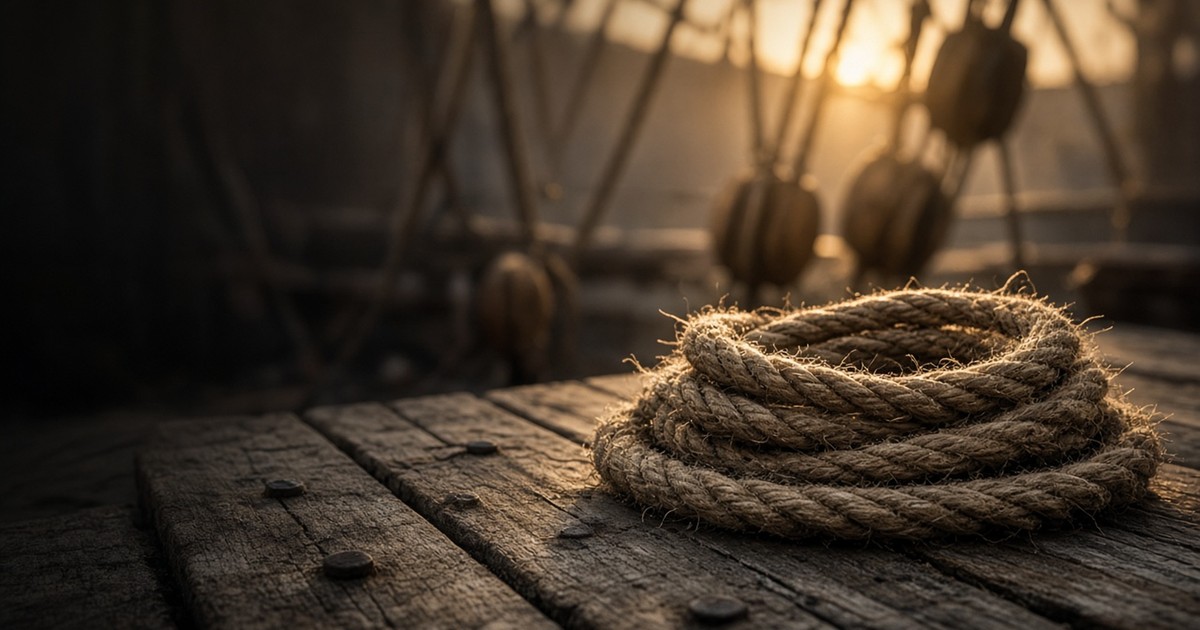
Sailing ships needed huge amounts of rope. In the 17th century, King Louis XIV wanted to rebuild the French navy. A navy needs an arsenal, and an arsenal needs a ropeworks.
In Rochefort, the Corderie Royale (Royal Ropeworks) was the very first building of the new arsenal. The naval intendant Colbert de Terron decided to build it on 25 March 1666. The building was finished in 1669. According to the Corderie Royale, it was the longest manufacture in Europe in the 17th century. The French heritage database records it at 373 metres long and 8 metres wide.
Why so long? The longest rope, about 195 metres, was called an “encablure”. As the museum puts it, you needed a long building to make it.
Only hemp fibre was used at the Corderie. The museum explains that the hemp stem was long (about 2.10 metres) and known for its strength. The French heritage database says the hemp came mostly from Auvergne and Brittany. Workers combed and spun it into yarn, then twisted the yarn into strands and rope.
The golden age did not last forever. The Corderie closed in 1862. In the museum’s words, steel and steam finally won over hemp. The building was burned in 1944 and later restored. Today it is home to the Centre International de la Mer, which opened there in 1985.